

Sîmir Rûdan behsa albûma "ez ê gîtara xwe" dike
Di vê bernameya taybet a Botan Timesê de, hunermend û muzîkjenê navdar Sîmir Rûdan mêvanê weşana me ya zindî ye.
Di vê bernameya taybet a Botan Timesê de, hunermend û muzîkjenê navdar Sîmir Rûdan mêvanê weşana me ya zindî ye.

In this special Botan Times episode, we take an in-depth look at the mission, history, and work of the
Di vê bernameya taybet a Botan Timesê de, em li ser dîrokçe, armanc û xebatên berfireh ên Navenda Kurdistanê ya

In an era where education in the Kurdish language is still non-existent, publishing houses in Northern Kurdistan face numerous fundamental obstacles. Issues such as budget deficits, a shortage of professional editors and copyeditors, and ongoing orthographic inconsistencies directly impact the quality of Kurdish publications.
In this interview, linguist, author, editor at Wardoz Publishing, and member of the Mesopotamian Foundation's Kurmanji Workshop, Bahoz Baran, highlights efforts to standardize Kurmanji Kurdish, the development of the "Rastnivîser" (Spellchecker) software project, and the role of artificial intelligence (AI) in archiving oral culture and folklore.
 Qesîm Etmanekî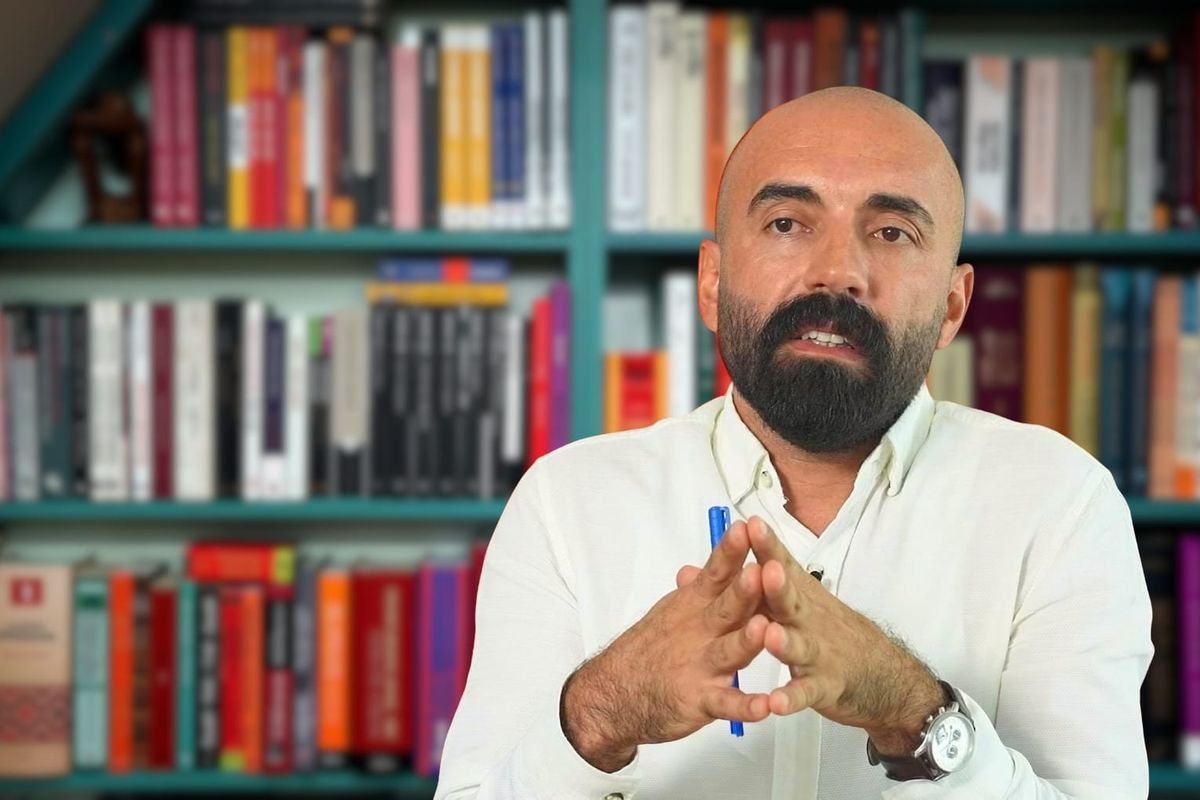
In most Kurdish publishing houses across Northern Kurdistan, the individuals preparing the books, acting as editors/copyeditors, and owning the publishing company are often the same person. In your view, is the primary reason solely a lack of budget, or does publisher negligence also play a role?
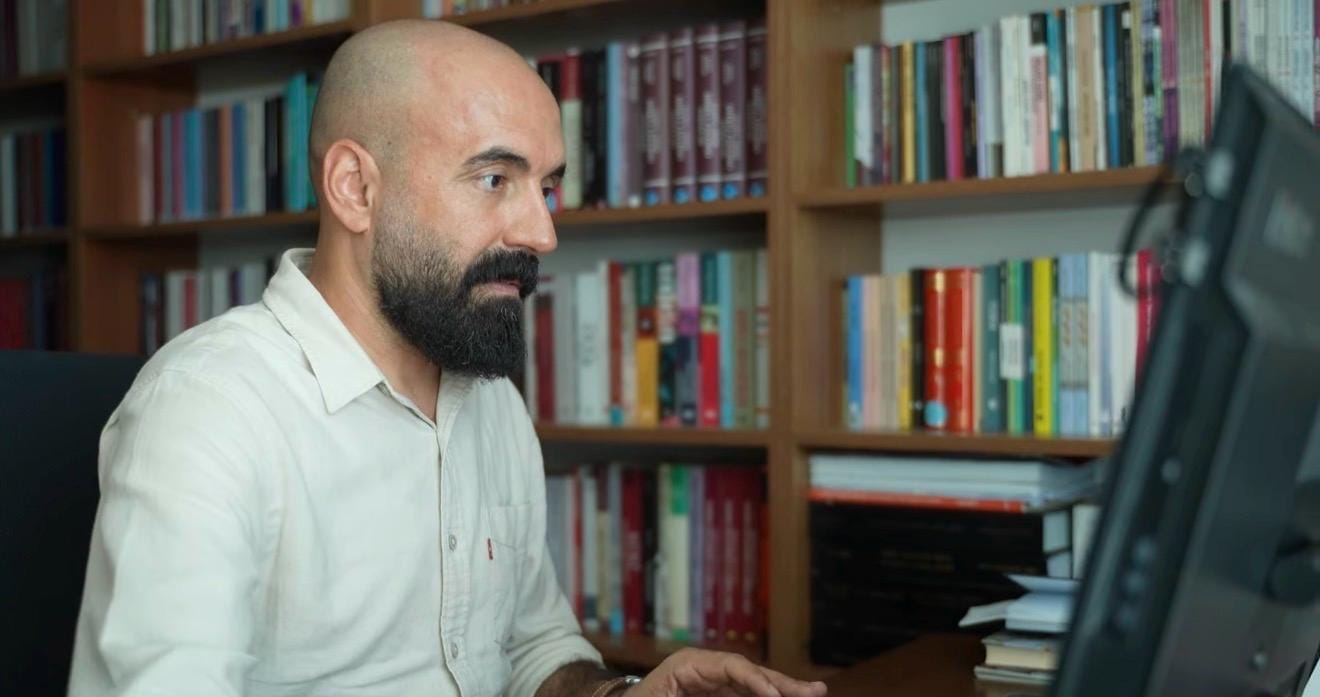
Bahoz Baran: One part of it stems from a lack of resources and economic hardship. People already read few books in general, but when we talk about reading Kurdish books, the situation deteriorates further. In Northern Kurdistan, 99% of Kurds cannot read or write in their native language. As far as I know, there are only around 5,000 to 10,000 active Kurdish readers. Relative to a population of 30 million Kurds, that does not even equal 0.1%. If it were 0.1%, there would need to be 30,000 readers. Furthermore, Kurdish institutions and organizations lack libraries capable of acquiring books from publishers to stock on their shelves. Setting the editor and copyeditor issue aside for a moment, we must ask ourselves: how are these publishing houses staying afloat, and how will they continue to survive?
In general, Kurdish books are not being read, demand remains low, and the readership is not expanding. Consequently, Kurdish publishing is constantly constrained and unable to scale. When a publishing house outsources editing, proofreading, cover design, and page layout, each item represents an added expense that burdens the firm. Truth be told, even if publishers wanted to hire externally, competent editors and copyeditors are extremely rare—they can be counted on one's fingers.
If a publisher manages these tasks well within its own means by training those around them, it is not a major issue. However, when a publisher relies excessively on a single individual, fails to develop itself, and remains amateurish, it harms both the firm and the broader Kurdish publishing ecosystem. That said, quality standards must not be compromised. We sometimes observe books being sent to press/publishing without proper reading or editorial review. This lowers the collective value of Kurdish publishing.
Publishing houses often fail to thoroughly read or evaluate manuscripts, fail to point out authors' shortcomings, or refuse to engage deeply with the texts—they simply issue a quick "yes" or "no" on printing. In reality, publishers ought to function like academies that mentor and train writers. Some book covers are so poorly designed that one does not even want to look at them.
Relying entirely on a single person is equally problematic; if that individual falls ill or passes away, all operations grind to a halt. Publishing houses must be capable of training new talent. Even among publishers with solid financial standing, many lack the vision to train editors, proofreaders, layout artists, and cover designers. A general wave of amateurism and lack of vision pervades Kurdish publishing; true professionalism remains scarce.
Orthographic standardization appears to be a major unresolved issue in Kurdish publishing. The Mesopotamian Foundation prepared an Orthography Guide and has spent years working on a Kurmanji Orthographic Dictionary, recently introducing its digital version. In recent years, workshops were also organized with Kurdish publishers in collaboration with the Foundation. How do you assess the current situation, and where is it heading?
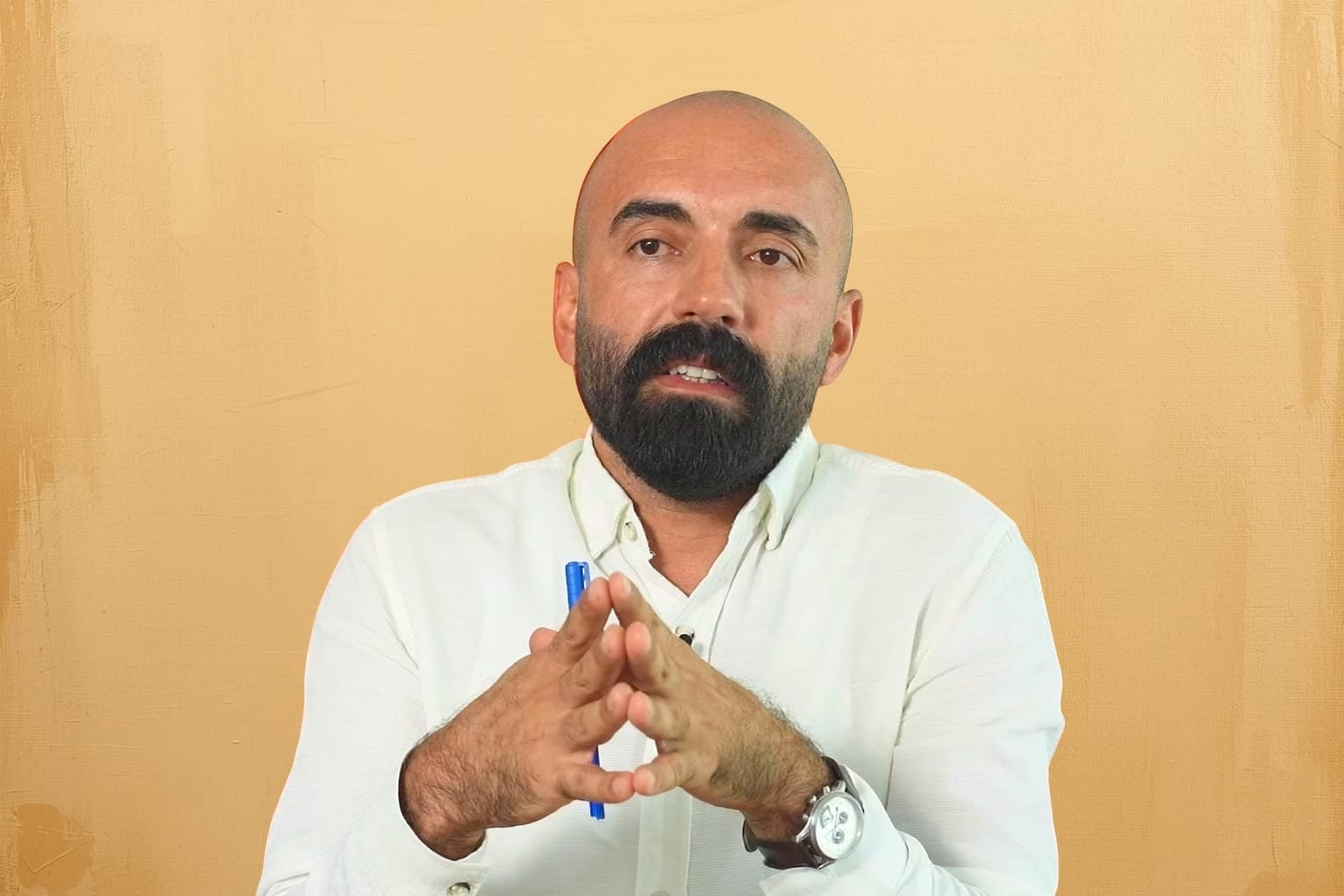
Bahoz Baran: This is a crucial matter. If you lack proper foundations yet act as though they exist, you will make countless errors. Many assume that a definitive Orthography Guide or Kurmanji Orthographic Dictionary has long existed. Truthfully, until recent years, it did not—and many still lack access to it, or choose not to use it even if available. How do these individuals hold all linguistic rules and spelling conventions in their minds without a reference work? How do they edit books and texts? We simply do not know. No single person can hold every rule and spelling in memory.
If you step inside the minds of these editors, you will encounter immense confusion—pure chaos. You pick up a book, and errors begin on the very first page. Grammatical and spelling conventions are inconsistent across pages: on one page you see "hevdu", on another "hevûdu", and on a third simply "hev". Language names are capitalized on one page and written in lowercase on the next. Apostrophes are used for possessive links in one instance and omitted in another. Month names conflict, and verbs are spelled in multiple ways. I could list a thousand errors. These mistakes compound, spread, and inflict serious damage on our language.
This chaos extends beyond publishing into the media and our local institutions. To give a concrete example: in Diyarbakır (Amed), there is a street named Kolana Mastfiroşê (Yogurt Vendor Street). The street sign was misspelled as "Mastfroş". That typo spread across the entire neighborhood, and to this day, it persists on numerous signs and business cards. Without an authoritative orthographic guide, people lose their way, creating utter confusion.
Kurdish has entered the domain of written language and continues to expand. Operating in writing without a standardized Orthography Guide and Dictionary is impossible. No language standardizes itself spontaneously. While Celadet Alî Bedir-xan accomplished monumental work for our language, he did not compile a comprehensive Orthography Guide or Orthographic Dictionary himself—that responsibility fell to us. This is not a task for a single individual; it requires collective effort, institutional backing, and consensus.
For eleven years, I have participated in the Mesopotamian Foundation’s Kurmanji Workshop. I believe the Foundation's standardization efforts are invaluable for the future of Kurdish. The Foundation formulates spelling rules based on sound linguistic principles. It has also prioritized technical integration: once the Orthographic Dictionary project is fully completed (a work eight years in the making), both the guide and dictionary will be integrated into Microsoft Word and other software via a specialized application called "Rastnivîser" (Spellchecker) to automatically correct text. Such tools are standard in most languages, relieving writers of orthographic micro-management. Until now, no such tool existed for Kurmanji. If the Foundation succeeds in deploying this, it will mark a revolution for written Kurdish.
As an editor at Wardoz Publishing who has proofread books for a decade, I cannot perform my job effectively without the Orthography Guide and Dictionary at my side. The Foundation has made both accessible digitally.
We must remember that our language lacks formal educational institutions, giving rise to dozens of regional dialects. If everyone writes in their local dialect and claims theirs is the sole correct form, we cannot make progress. Publishing houses must establish firm guidelines that do not shift according to individual authors' preferences. Readers are increasingly discerning and frustrated by these inconsistencies. Publishers are keeping written Kurdish alive, especially in urban centers; in the absence of formal schooling, publishing houses effectively act as schools. Therefore, they must resolve their internal contradictions regarding spelling. The Foundation aims to collaborate with all relevant institutions and offers workshops for editors and proofreaders upon request.
Nearly all Kurdish publishers state that they are operating under severe financial strain. To ease printing costs, some publishers accept payments from authors to print their works. How does this practice impact Kurdish publishing?
Bahoz Baran: As I noted in my book Jîyaneka Berevajî, elsewhere publishers pay royalties to authors, whereas here, publishers collect money from authors to print their books. Granted, the financial standing of our publishers cannot be compared to that of dominant-state publishers. However, when money directly dictates publishing decisions, book quality drops, and substandard manuscripts get printed.
The primary criterion must always be quality—a book must be good. If a publishing house maintains high standards but faces financial hardship, and an author voluntarily offers to contribute costs, that is acceptable—provided the author is not forced to do so. Major publishers with ample resources should be paying royalties, yet even they often fail to do so.
Until recently, publishers struggled significantly with book distribution and sales. Recently, new avenues like online sales platforms and cooperatives have emerged. Under these new conditions, can publishers sell their books online collectively through a cooperative framework?
Bahoz Baran: Kurds must leverage technological tools effectively. Every publisher should maintain a functional website capable of direct sales; this is no longer a complex task. Through cooperatives, publishers can unite, pool their strength, and maximize existing resources. That is why organizations like Yewkurd are so vital.
While certain third-party platforms exist for book sales, I have observed a shift in their priorities lately—they increasingly favor popular merchandise over literature.
How has artificial intelligence impacted publishing? What opportunities does AI offer for Kurdish publishing, and does Wardoz Publishing utilize AI tools in its operations?
Bahoz Baran: Because Kurdish is not yet deeply integrated into AI models, we cannot derive immense benefit from it for Kurdish text at present. AI does not yet speak Kurmanji well—it is like a young child that requires development. We occasionally utilize AI for image generation and cover design. However, because its Kurdish capabilities remain weak and language standardization is incomplete, it cannot handle proofreading or editing tasks for us today.
As Kurdish integration improves, AI will eventually become a valuable asset for editing and translation. It could also prove exceptionally useful for oral folklore transcription by decoding audio files. I estimate that within five or six years, AI will perform not just proofreading, but full editorial evaluations of manuscripts.
Many Kurdish publishers remain hesitant about e-book sales, fearing that unauthorized PDFs will circulate online and render their hard work uncompensated. Where does Wardoz Publishing stand on e-book commercialization?
Bahoz Baran: Publishers' concerns are entirely justified; one must trust the platform distributing e-books. Currently, Google offers the most secure infrastructure, and we intend to publish our catalog on that platform. However, we frequently run into technical and administrative hurdles.
In this day and age, anyone with a modern smartphone can convert a physical book into a PDF and distribute it widely. While copyright law exists and legal action can be taken against infringers, publishers must prevent their books from leaking as loose PDFs. Providing secure digital editions that reach all Kurds is sufficient. Given that Kurdish book sales are already low, rampant PDF circulation would bankrupt publishing houses.
Digital formats open new doors; audiobooks, for instance, have grown immensely popular worldwide and in Turkey. Given that much of your work centers on folklore, do you plan to digitize your archives in audio format?
Bahoz Baran: Kurds must advance technologically. Books should exist simultaneously in print, digital, and audio formats. Today, audio production requires professional recording studios and skilled voice actors—resources that most publishers simply do not possess. Without institutional financial support, this remains difficult.
However, trends suggest that in a few years, AI will be capable of narrating books natively without requiring studio recording sessions. When we founded our publishing house, audiobooks were part of our long-term roadmap, though we have not yet realized that objective.
Folklore collectors used to visit villages with electronic recorders to document oral culture—and some still do. Today, any shepherd or elder with a smartphone can broadcast unarchived cultural content across digital platforms like Meta, TikTok, and YouTube. How does this shift impact researchers working on Kurdish folklore?
Bahoz Baran: These media platforms are excellent for disseminating and raising awareness of Kurdish culture and folklore. However, social media is plagued by chaos and unverified content. For folklore, the indispensable steps are proper recording followed by systematic transcription. Thousands of videos exist on YouTube today, yet they remain untranscribed and unintegrated into written literature. As a result, they cannot serve as accessible research materials.
Many creators publish content as a hobby to gain followers or popularity, whereas folklore collection requires professional methodology. Technology has bridged geographic distances—which is positive—but field collectors must receive proper training.
Kurdistan contains thousands of villages where systematic collection has never taken place. If a mere ten books were compiled per village—and the potential is far greater—that would yield over 10,000 volumes. In other words, our oral library holds the equivalent of 10,000 unwritten books. We must record these voices, convert them into physical works, and deposit them into our written archive.
We must remember: whatever we build in the future must rest upon our historical roots. This oral library diminishes day by day, and as a nation, we currently lack the awareness required to safeguard our oral heritage. If we can record, digitize, and feed this heritage into AI systems, it will revolutionize our culture and folklore while refining AI models to serve us better.
There should be a dedicated folklore institute tasked with aggregating, sifting, and transcribing audio-visual material from these online platforms. Regrettably, Kurdish cultural and folkloric heritage remains scattered across social media. For instance, we ought to have established a comprehensive online dictionary of idioms and proverbs by now. If you ask current AI models about Kurdish idioms, or attempt to translate them via Google Translate, the results are often nonsensical.
Translations on Botan Times are assisted by Gemini AI. All content is thoroughly reviewed and approved by an editor before publication. This translation edited by Murat Bayram
-This interview was produced with financial support from the Embassy of the Federal Republic of Germany in Ankara, under the project 'Strengthening Local Media Institutions through International Mentorship and Digital Transformation.' The contents of this article are the sole responsibility of our publication.


In this special Botan Times episode, we take an in-depth look at the mission, history, and work of the

In this comprehensive and inspiring interview on Botan Times, we sit down with internationally acclaimed researcher and academic Dr. Pawan

In this in-depth interview on Botan Times, renowned Dutch philosopher and linguist Dr. Michiel Leezenberg (University of Amsterdam) discusses

DIYARBAKIR — The Avesta Cultural Foundation has announced that its inaugural Honor Award will be presented to the distinguished historian and

Tu eposteya xwe binivîsî em ê ji te re bûltenan belaşî bişînin...