


Kurdish media, which defined its existence in the 1990s at a heavy cost against state oppression, bullets, bombings, and severe censorship, today faces an internal crisis: a crisis over the definition of intellectual freedom.
Writer and lawyer Fırat Aydınkaya addresses Kurdish journalism in his article titled "Kürt Medyası Özgürlükten Ne Anlıyor?" ("What Does Kurdish Media Understand by Freedom?"), published on his Substack blog (Hawarname). Aydınkaya draws attention to the fact that Kurdish media is grappling with the problem of unitonalism and asks why our media cannot move beyond looking like "party bulletins" and remain closed to diverse ideas and criticism.
 Botan Times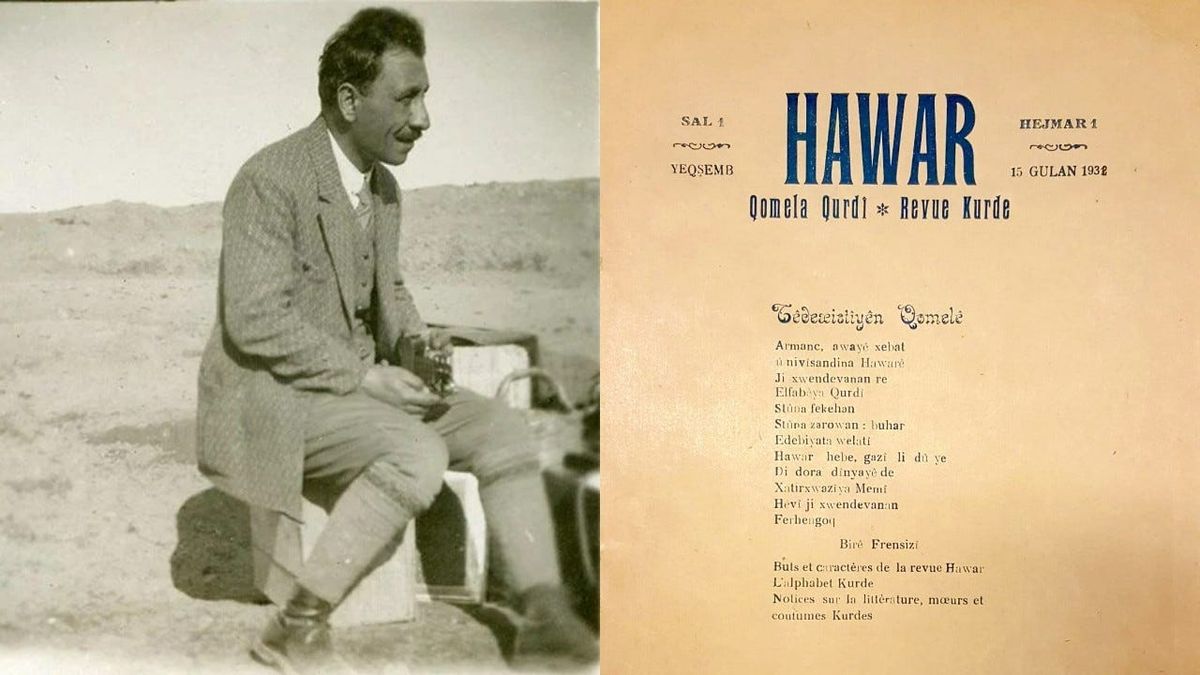
From Celadet Beg’s Principles to Party Bulletins
To understand this problem, Aydınkaya reminds us of the history of Kurdish journalism. To circumvent the censorship of Sultan Abdulhamid, the Bedirxan brothers delivered the newspaper Kurdîstan to intellectuals under immense hardship. However, the obstacle before them was an external authority. The primary question arising today is: what do we do when the authority is not external, but internal?
A genuine model of editorial self-governance exists in our history. In the journal Hawar, Celadet Alî Bedirxan created an open platform for writers who were debating the causes behind the defeat of the Sheikh Said rebellion and seeking accountability. Celadet defined Hawar as a free platform, setting as his only condition the preservation of literary standards and respect. He never allowed his personal opinions to dictate editorial policy. Yet today, as Aydınkaya points out:
"Our media institutions have fallen behind not only global standards of intellectual freedom, but even behind the liberal standards that we often look down upon."
Freedom of Thought Is Not Just for Allies
The core of the crisis lies here: freedom of the press is not merely an stance against external pressure; it is the internal definition of the institution itself. If an editor or site manager reads and publishes only those articles that align with their personal taste or political line, that platform is not a realm of freedom—it is the manager's personal shop.
Aydınkaya cites the example of the magazine Commentary in the 1950s. When Hannah Arendt submitted an article containing controversial and provocative views, the editorial board published it to protect freedom of expression, simply appending a footnote stating they did not share those views. In this context, we must ask ourselves why Kurdish platforms are so afraid of debate and of unsettling their readers.
"Does freedom of expression not mean voicing and publishing things that the site manager dislikes, things that can shake up the masses, deconstruct what party supporters take for granted, and shock party decision-makers?"
An editorial management that views criticism as "damaging its image" turns us into clerks operating a photocopy machine. Kurdish press must either return to its principled roots drawn by Celadet Beg, or remain a curator of party bulletins. True freedom begins where we can listen to opposing voices in the public square, rather than driving them into solitude.
Translations on Botan Times are assisted by Gemini AI. All content is thoroughly reviewed and approved by an editor before publication. This translation edited by Murat Bayram

Zêdetir bixwîne

Early puberty prevents children from reaching full height — Zelal Sinayiç
Early puberty in children can restrict overall growth and trigger lasting psychological distress, according to Şervan Özalkak, a pediatric endocrinologist

B. R. Amed, Entered Prison at 23 and Walked Free at 53: 'I Realized I Had to Save Myself First, Not the World'"
Author and journalist Bejdar Ro Amed, who stepped into freedom at age 53 after entering prison at 23, spoke about

Serdar Şengul, Ferzan Şêr: How Can We Build a Kurdish Public Sphere?
In this article, we spoke with Serdar Şengul and Ferzan Şêr, the hosts and creators of BaneşanPodcast. In this text,


How a Single Novel Opened a New Chapter for the Zazaki Literature?
Deniz Gunduz is one of the authors who wrote a novel for the first time in Zazaki literature. "Kilama