

Fîlma La Espalda Del Mundo: Portreya Mehdî Zana ya sirgûniyê
Bîranîn, cureyeke rabirdûyê ye ku bi dema niha ve hatiye girêdan û tê de bîr aktîv dibe û şîn ji


Sheikh Said Efendi (1865–1925) lived during the final years of the Ottoman Empire and the foundational era of the Republic. He was a prominent grandmaster of the Naqshbandi-Khalidi Sufi order, a major Kurdish social and political leader, and the figurehead of the 1925 Movement. However, defining him solely as the leader of the 1925 Movement risks reducing his multifaceted legacy to a single historical moment. Sheikh Said Efendi was the inheritor of a centuries-old scholarly and mystical tradition, the founder of an extensive network of madrasas, and one of the most influential figures shaping the religious, intellectual, and social life of Kurdistan.
 Merve Fırat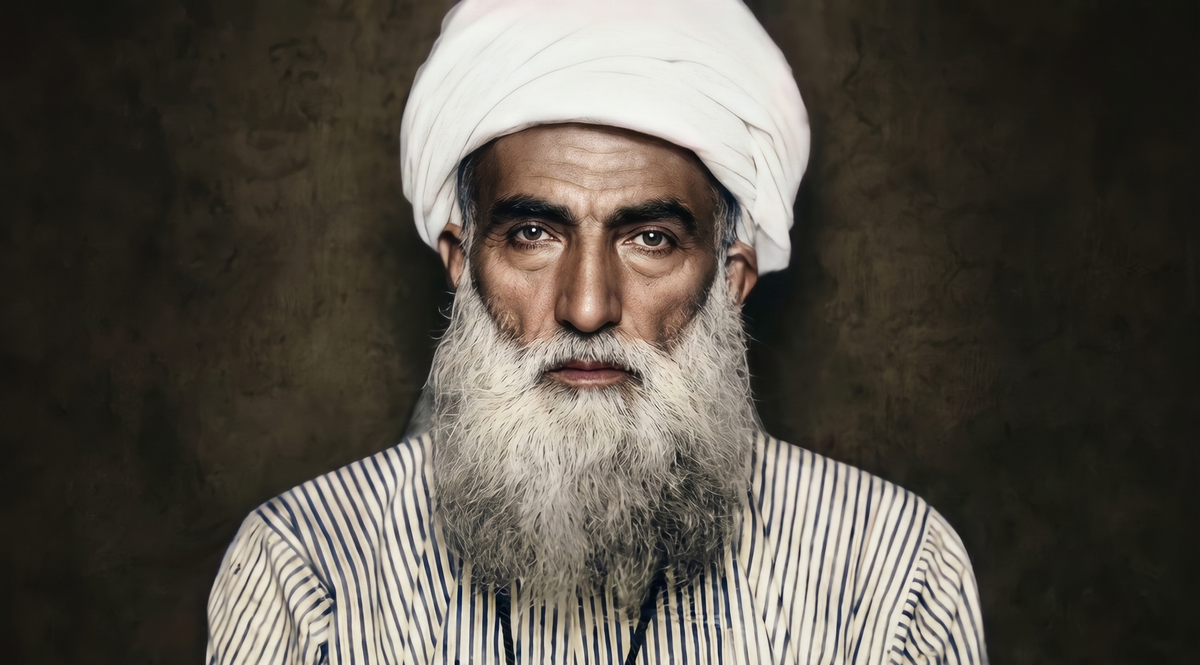
His family roots traced from Bademyar near Tabriz to Urmia, and from there to Diyarbakir, Palu, and Khunus (Hınıs), boasting a lineage of sayyids (descendants of the Prophet) rooted deeply in the Naqshbandi-Khalidi order. Since the 16th century, the Bademyari and Urmia Sheikhs had been active across Kurdistan, not only establishing a Sufi tradition but also leading intellectual production and social guidance through the madrasas they built. Sheikh Said’s grandfather, Sheikh Ali Septi Efendi, was a vital representative of this tradition and a prominent khalifa (successor) of Mawlana Khalid al-Baghdadi.
From an early age, Sheikh Said Efendi received a rigorous madrasa education. After completing his initial studies under his father, Sheikh Mahmud Fawzi Efendi, and his uncle, Sheikh Hasan Efendi, he immersed himself in classical Islamic sciences and received his ijazah (license to teach) at a young age. His pilgrimage to the Hijaz marked a pivotal milestone in his scholarly journey. There, he focused intensively on the science of Hadith, studying under the leading scholars of the era and receiving a formal Hadith license.
In the Naqshbandi-Khalidi tradition that shaped Sheikh Said Efendi, the separation of exoteric knowledge (ilm) and esoteric mysticism (tasawwuf) was utterly rejected. In the educational system of Mawlana Khalid al-Baghdadi, neither madrasa schooling alone nor Sufi practice by itself sufficed. Those who did not excel in both domains were denied an ijazah. According to this ethos, a successor had to be fully mature in both the exoteric sciences and spiritual discipline. Under the framework of the Sheikh Ali Septi school, Sheikh Said Efendi embodied this tradition, seamlessly merging intellectual authority and mystical leadership within his persona.
Sheikh Said Efendi expanded the scholarly heritage he inherited from his father by establishing an extensive network of madrasas. These institutions employed numerous mudarris (professors, lecturer ) and educated hundreds of students. Concurrently, he was one of the wealthiest merchants in the Eastern Provinces (Vilayeti Şarq). He engaged in the livestock trade, particularly with Aleppo and Damascus, using his commercial revenues to grant his madrasas financial independence. Furthermore, he maintained close ties with major intellectual centers in Egypt, Damascus, Aleppo, Baghdad, the Hijaz, and Samarkand. Throughout his travels, he acquired rare manuscripts, building one of the richest private scholarly libraries of his time.
With the establishment of the Republic, the subsequent political and social upheavals triggered profound disillusionment, particularly in the Kurdish provinces. The abolition of the Caliphate in 1924, the closure of dervish lodges (tekkes) and madrasas, the liquidation of religious institutions, and the acceleration of centralization policies were viewed not merely as administrative reforms, but as steps that fundamentally upended the social fabric. Moreover, the promises of autonomy and a shared political future made to the Kurds during the "National Struggle" (Milli Mücadele) went unfulfilled. Instead, the new government envisioned a nation-state built strictly on a Turkish identity. The policies of denial and assimilation aimed at Kurdish identity deepened the regional despair. As Sheikh Said Efendi famously noted, the abolition of the Caliphate severed "the final bond between Kurds and Turks." Therefore, the 1925 Movement should not be viewed purely as a product of religious sensitivities or Kurdish nationalism alone, but rather as a historic rupture where religious, political, and social aspirations converged.
Armed with his scholarly authority, mystical legitimacy, and a vast network of madrasas and disciples spanning the wide geography of Kurdistan, Sheikh Said Efendi became the natural leader of the movement. The uprising, which coalesced around Naqshbandi-Khalidi circles, tribal networks, and local leaders, spread rapidly across a vast territory. However, within a few months, the movement weakened. Sheikh Said Efendi and forty-six of his comrades were condemned by the Independence Tribunal (İstiklal Mahkemesi) and executed on June 29, 1925.
Yet, the story of Sheikh Said Efendi did not end with his execution. For the past century, the location of his grave has remained strictly concealed; his madrasa and his library of nearly twenty thousand volumes were looted; and his family was exiled three separate times. Consequently, understanding Sheikh Said Efendi is not just about understanding the 1925 Movement; it is about understanding how death, memory, and knowledge become subjects of political intervention.
The official burial site of Sheikh Said Efendi has never been disclosed. Despite the passage of a century, his family and the public remain unaware of where his remains lie. This situation is not merely a historical ambiguity; rather, it reflects a deliberate practice of erasure.
Concealing a person's grave goes beyond hiding a burial site. It represents the severing of the final physical link to the deceased, leaving grief displaced and stripping the collective memory of a focal point. Thus, the missing grave of Sheikh Said Efendi is not an event confined to the past. It is an ongoing assertion of state sovereignty over death, memory, and space.
The framework of necropolitics [1] highlights how the modern state manages not just life, but death itself. Sovereignty entails control not only over how people live, but also over what happens to their bodies after death, where they are buried, and how they are remembered. From this perspective, the concealment of a grave is an exercise of sovereign power that extends far beyond biological demise.
Furthermore, mourning is not merely a personal emotion; it is a recognized social and political right [2]. The absence of a grave perpetually suspends the grief of those left behind. The concealment of Sheikh Said Efendi's grave is not just the obfuscation of a physical body; it is the systematic restriction of public mourning, remembrance, and collective commemoration.
However, missing graves do not only produce silence; they also nurture counter-memories. In Diyarbakir, the formation of local narratives and collective memory around the Sheikh Said Square/Dagkapi area—where his grave is believed to be located [3]—demonstrates that the past the official history seeks to silence persists through alternative channels. In this regard, the missing graves of Sheikh Said Efendi and his comrades stand both as concrete manifestations of the state's claim to sovereignty over death, and as potent symbols of resilience for social memory.
Following Sheikh Said Efendi's execution, his physical body was not the only target; his scholarly legacy was also systematically dismantled. His personal library of approximately twenty thousand volumes, located at his madrasa in Khunus, was completely looted. Given the conditions of that era, this collection could be considered not only one of the most vital private libraries in Kurdistan, but one of the most significant across the broader Ottoman geography.
This library had been meticulously assembled over decades. During his travels to intellectual hubs like Egypt, Damascus, Aleppo, the Hijaz, and Samarkand, Sheikh Said Efendi acquired rare manuscripts in Arabic, Persian, Ottoman Turkish, and other languages. Comprising works in Islamic jurisprudence (fiqh), Hadith, Quranic exegesis (tafsîr), scholastic theology (kelam), logic, Sufism, and history, the collection was far more than a mere accumulation of books. It served as a primary repository for the centuries-old intellectual memory of the Kurdish madrasa tradition.
The library contained not only classical works but also manuscripts authored by Sheikh Said Efendi himself. However, after 1925, the madrasa and its library were plundered, and thousands of these unique manuscripts vanished. According to accounts from his relatives, only two handwritten works were successfully salvaged: the The Catalogue of The Library (Risaleya Pirtûkxaneyê) [4] and the Collection of Fatwas (Mecmûaya Fetwayan) [5].
The Catalogue of the Library is one of the oldest known documents detailing a private library in the Kurdish region. Written in his own hand, Sheikh Said Efendi cataloged the Arabic, Persian, Ottoman, and other volumes within his collection, creating a bibliographic index that serves as a testament to his lost scholarly heritage. The Collection of Fatwas remains an invaluable collection of legal rulings addressing various contemporary socio-religious issues.
The destruction of Sheikh Said Efendi's library was not merely the theft of books; it was a systematic assault on the intellectual and cultural memory of the Kurdish madrasa tradition. Today, the two surviving manuscripts stand as silent witnesses to thousands of lost volumes, representing the final remnants of an intellectual world that was systematically dismantled.
Discussions surrounding Sheikh Said Efendi are often restricted to the military and political dimensions of the 1925 Movement. Yet, his legacy did not end on the day of his execution. The concealment of his grave, the triple exile of his family, and the looting of his library demonstrate a state effort to establish long-term dominance not just over physical bodies, but over death, memory, and knowledge itself.
A century later, what remains are not just unanswered historical questions, but an unacknowledged grave, displaced grief, and an intellectual heritage targeted for erasure. Despite this, a resilient social memory endures. Remembering Sheikh Said Efendi is therefore not merely an act of recalling the events of 1925. It is the re-emergence of an invisible grave, suppressed mourning, destroyed books, and silenced memories; it is a profound reconsideration of death, justice, and cultural heritage.

The Southeastern Journalists Association (GGC)—a 49-year-old organization with nearly 400 members—has been honoring journalism through its


Early puberty in children can restrict overall growth and trigger lasting psychological distress, according to Şervan Özalkak, a pediatric endocrinologist


Author and journalist Bejdar Ro Amed, who stepped into freedom at age 53 after entering prison at 23, spoke about

In this article, we spoke with Serdar Şengul and Ferzan Şêr, the hosts and creators of BaneşanPodcast. In this text,

Tu eposteya xwe binivîsî em ê ji te re bûltenan belaşî bişînin...