


DIYARBAKIR — The Diyarbakır Walls, a UNESCO World Heritage site, face ongoing threats of destruction, vandalism, and encroachment despite extensive restoration efforts.
Prof. Dr. Aziz Yağan, a member of the Kuzey Yıldızı Foundation, has raised critical concerns regarding the future of the historic structure.
Reporting by Zelal Sinayiç, Amîda Haber
 Botan Times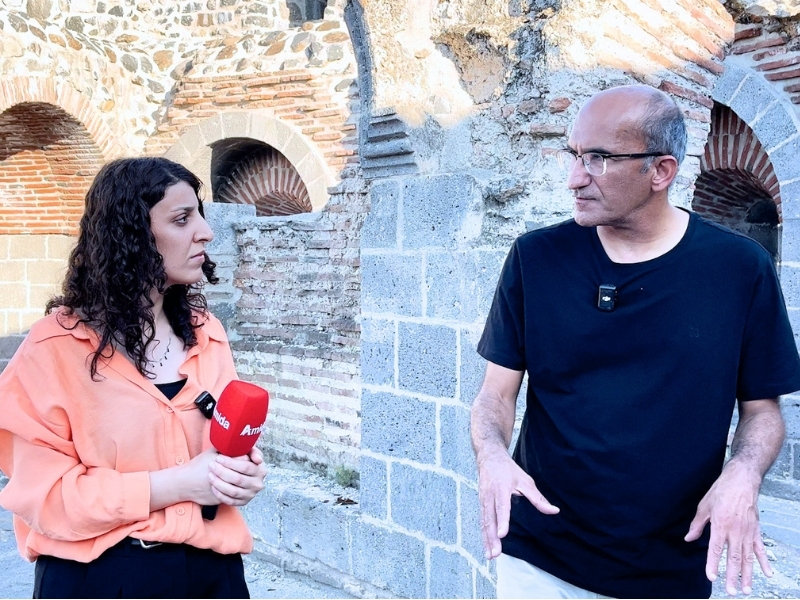
With a history spanning nearly 5,000 years and having played host to numerous civilizations, the Diyarbakır Walls are currently grappling with significant risks due to encroachment, illegal utilization, and a lack of oversight. Despite restoration projects costing millions of liras, several bastions and historic sections are showing renewed signs of deterioration, while illegal occupation persists on both the interior and exterior facades of the walls.
Prof. Dr. Aziz Yağan provided an assessment of the challenges facing the Diyarbakır Walls for Gazete Detay.
'As Interest Grows, So Does the Destruction'
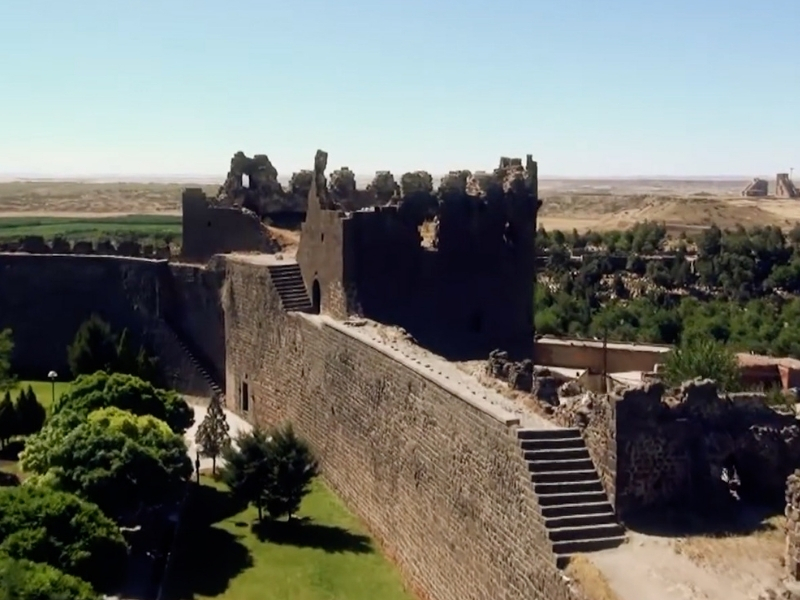
Yağan emphasized that the Diyarbakır Walls represent one of the world's most significant cultural heritage sites. "The Diyarbakır Walls and the Diyarbakır Fortress hold the same historical value as Rome or Bruges," Yağan said. "While public interest in the site is steadily increasing, this influx has unfortunately brought more destruction because the walls are not being adequately preserved."
He noted that the issue extends beyond restoration to how the site is managed. "Previously, visitors were predominantly local residents. Today, commercial expansion and tourism have significantly boosted visitor numbers. Because preservation measures have not scaled accordingly, the damage continues to escalate."
'Encroachment on Public Space Has Become Deep-Seated'
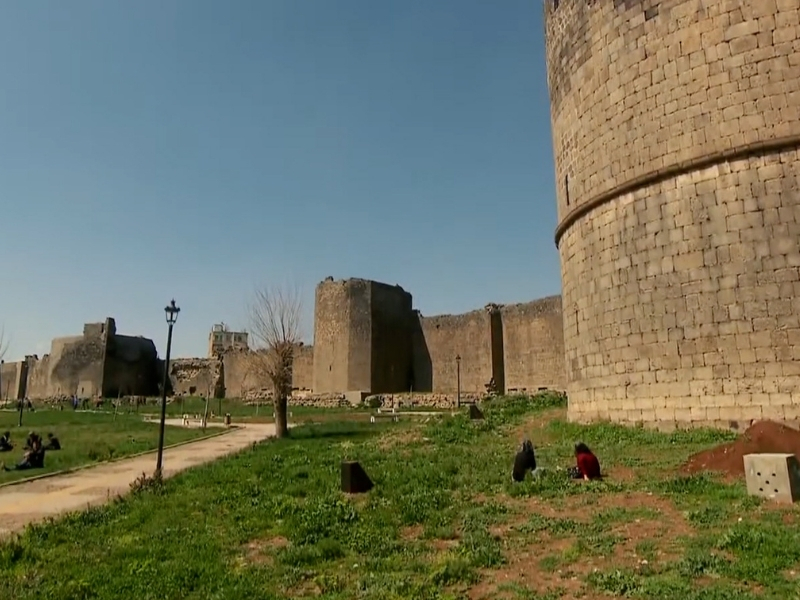
Highlighting the issue of encroachment within the historic Sur district and surrounding heritage areas, Prof. Dr. Yağan stated that the problem is not new but has become normalized over the years. "Some individuals view this encroachment as a right," Yağan observed. "In the absence of active enforcement, unauthorized interventions occur freely. Sidewalks remain obstructed, and street vending operates without regulation."
He further pointed out that a lack of oversight has allowed mobile food vendors to operate from minibuses along the roadsides, a trend that is now manifesting on the historic walls themselves.
'The Municipality and Governor’s Office Must Act Jointly'
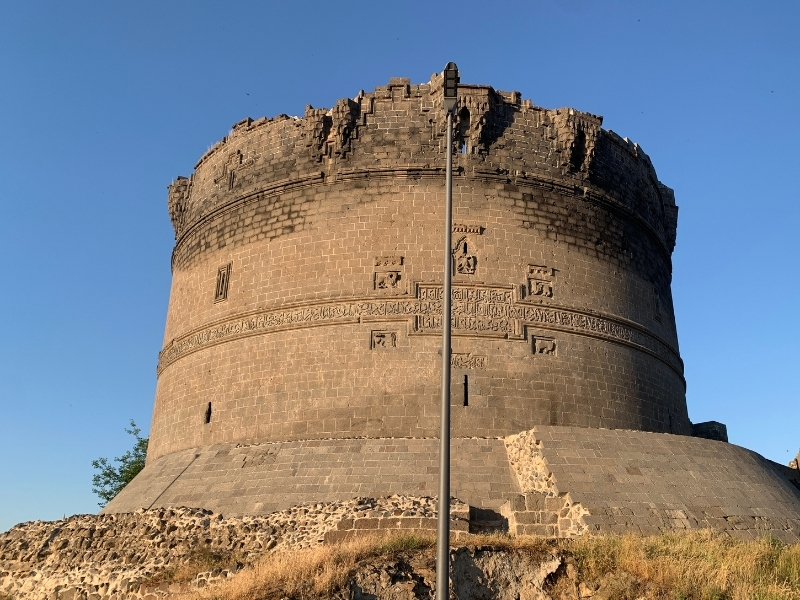
Addressing the shortcomings of local authorities, Yağan stressed that neither the municipality nor the governor's office can resolve the issue independently. "The two institutions must operate in coordination. While occasional steps are taken, they lack permanence. Without a unified and sustainable policy, the problem will persist. This cannot be overlooked under the pretext of livelihood generation. The sooner a joint policy is established, the faster a solution will be reached."
'The Resurgence of Cafes and Restaurants Is a Step Backward'
Yağan characterized the return of cafes and restaurants—which had been cleared out in 2005—as a distinct regression. "In the past, commercial venues operating directly beneath the walls were removed. Even residential structures whose rear walls relied directly on the fortification system were cleared, which was the correct decision. Today, however, similar commercial uses are re-emerging indirectly. The setup of seating areas and tea stations for commercial purposes must be strictly prohibited."
He maintained that the bastions and historic spaces should be reserved for public benefit, cultural programming, and artistic events rather than commercial enterprises. "Instead of viewing the walls as a source of revenue, authorities must adopt an approach centered on heritage preservation."
'This Institutional Divide Is Unacceptable'
Regarding the lack of cooperation between relevant agencies, Prof. Dr. Yağan noted that while the friction may stem from long-standing institutional issues, such a divide is unacceptable when a millennia-old heritage site faces the risk of being lost. "If local institutions cannot work together, a new coordination mechanism must be established. The city's civic dynamics must take initiative. If cooperation cannot be achieved, this should be transparently stated to the public."
He added that the ongoing friction fatigues local residents and leaves visitors with a negative impression of Diyarbakır, a city built by multiple civilizations that demands collective responsibility.
'The Tourism Police Proposal Is Highly Appropriate'
Yağan strongly endorsed the proposal to introduce a specialized "tourism police" force to protect the Diyarbakır Walls and surrounding historic quarters. "A dedicated tourism police unit, focusing solely on the security and preservation of historic and touristic zones, would be highly effective. This unit could feature distinct uniforms and operating procedures, supported by the Diyarbakır Metropolitan Municipality. Integrated with camera surveillance, such a model could significantly mitigate the prevailing issues across our historic sites."

Zêdetir bixwîne

Botan International Honored with 40th Anniversary Press Freedom Award; Dedicates Prize to Reporters Without Borders (RSF)
The Southeastern Journalists Association (GGC)—a 49-year-old organization with nearly 400 members—has been honoring journalism through its

Early puberty prevents children from reaching full height — Zelal Sinayiç
Early puberty in children can restrict overall growth and trigger lasting psychological distress, according to Şervan Özalkak, a pediatric endocrinologist

B. R. Amed, Entered Prison at 23 and Walked Free at 53: 'I Realized I Had to Save Myself First, Not the World'"
Author and journalist Bejdar Ro Amed, who stepped into freedom at age 53 after entering prison at 23, spoke about

Serdar Şengul, Ferzan Şêr: How Can We Build a Kurdish Public Sphere?
In this article, we spoke with Serdar Şengul and Ferzan Şêr, the hosts and creators of BaneşanPodcast. In this text,
