


Kurdish Language and Literature graduates face severe employment barriers due to heavily restricted civil service quotas in Turkey. In response, many turned to online private tutoring to sustain their careers. However, Kurdish language instruction lags significantly behind exam-oriented subjects in the private education market. While hourly rates for subjects like mathematics reach up to 3,000 TL, Kurdish private tutoring rates start at a mere 750 TL.
by Zelal Sînayîc
 Nivîskarên Mêvan
High Costs Stigmatized as Demand Stagnates
Kurdish Language and Literature departments launched across several Turkish universities in 2012. This allowed elective Kurmanji and Zazaki courses to enter middle school curriculums. Institutions like Dicle, Mardin Artuklu, Muş Alparslan, and Bingöl universities collectively graduate between 100 and 120 students annually. However, low student enrollment in electives combined with minimal public teaching appointments left hundreds of graduates stranded.
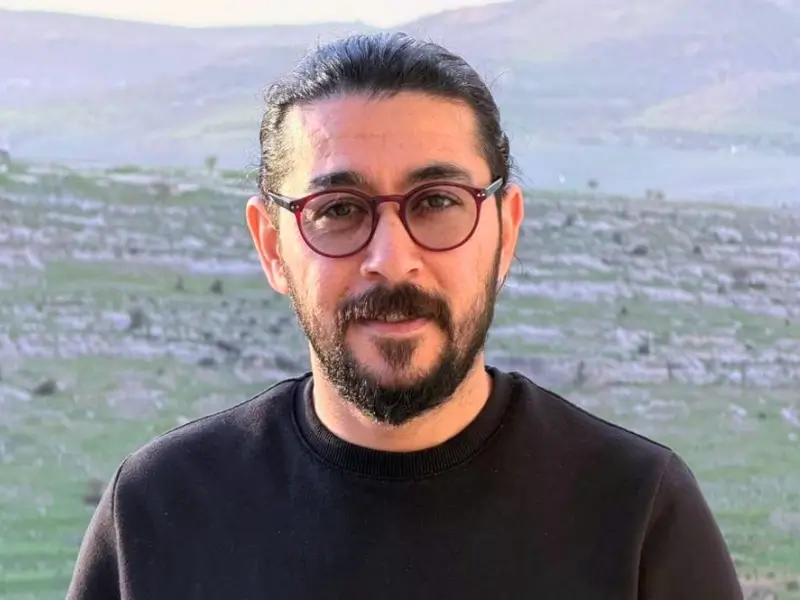
Şêrko Janzêm, an online Kurdish tutor with six years of experience, reported that public interest remains far below expectations.
According to Janzêm, private Kurdish lessons fluctuate strictly between 750 TL and 1,200 TL. Social awareness regarding native language education remains inadequate. Prospective students frequently label these modest fees as expensive, or they argue that native language instruction should be entirely free. Meanwhile, a single hour of mathematics tutoring commands between 1,500 TL and 3,000 TL. Because the community does not financially prioritize its own language, the market value for Kurdish instruction remains heavily depressed.
The Shift From State Pressure to Self-Assimilation
The primary demographic seeking online Kurdish tutoring consists of adults aged 25 to 40. Janzêm noted that while most of his students are ethnically Kurdish, they grew up in western metropolises where Kurdish was completely absent from family households.
With a student base spanning Europe, the United States, and various Turkish provinces, Janzêm argued that elective school courses alone cannot preserve the language.
"Kurdish requires comprehensive legal status," Janzêm emphasized. "Parents carry the primary responsibility. Today, we observe households where the parents do not speak Turkish, yet their children cannot comprehend Kurdish. Historically, state pressure alienated children from their language at school. Today, the dynamic has shifted to self-assimilation. Parents are actively distancing their children from the language without direct state intervention telling them to do so."
Daily Life Anchored in Turkish
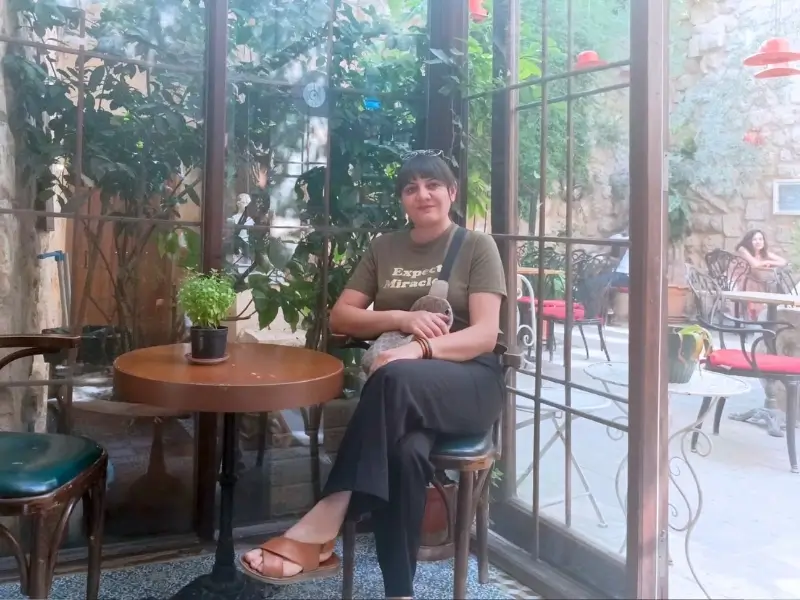
Fatma Şahin, who has taught Kurdish online for five years, corroborated that institutional demand for Kurdish is marginal compared to foreign languages.
Interest in Kurdish is drastically lower than the demand for English or German. Concurrently, university departments and total graduate numbers increased, reducing the student-to-teacher ratio. Şahin explained that those who do pursue Kurdish are driven purely by cultural consciousness.
"This cultural awareness exists in only about 20 percent of the community," Şahin stated.
"The remaining population questions the practical utility of the language, asking how Kurdish serves them in daily life. This reaction occurs because public and economic life is almost exclusively structured around Turkish."
Youth Interest and Written Media Surge
Despite low domestic utility, Şahin pointed out that Kurdish publishing, social media presence, and cultural initiatives have heightened the language's public visibility. This shift has notably stimulated interest among younger generations.
"Kurdish has successfully transitioned beyond a domestic tongue," Şahin said. "It has secured a distinct space within literature, digital media, and independent journalism. We are tracking significant growth, particularly in reading and writing literacy."
Shifting Demographics Beyond the Home
Instructional motives vary widely among modern learners. Şahin currently manages multiple educational tracks, including specialized corporate groups connected to publishing houses alongside private students.
"One cohort consists entirely of children, while another comprises adult women," Şahin explained. "Some seek to refine their existing grammar, others aim to pass the language down to their children, and a segment of female students enrolls specifically to learn the native tongue of their Kurdish partners."
Historically, political and social pressures restricted spoken Kurdish. Today, institutional courses, independent publishing houses, bookstores, and social media networks have internationalized the language.
"In the past, the gross number of speakers was higher, but written publication, translation, and cultural output were severely constrained," Şahin concluded. "Today, while domestic household usage shows a decline, written production is accelerating. If this trajectory holds, the census of literate Kurdish readers and writers will increase substantially over the next few years. However, institutional backing and local municipality support remain vital to solidify these gains."

Zêdetir bixwîne

Botan International Honored with 40th Anniversary Press Freedom Award; Dedicates Prize to Reporters Without Borders (RSF)
The Southeastern Journalists Association (GGC)—a 49-year-old organization with nearly 400 members—has been honoring journalism through its

Early puberty prevents children from reaching full height — Zelal Sinayiç
Early puberty in children can restrict overall growth and trigger lasting psychological distress, according to Şervan Özalkak, a pediatric endocrinologist

B. R. Amed, Entered Prison at 23 and Walked Free at 53: 'I Realized I Had to Save Myself First, Not the World'"
Author and journalist Bejdar Ro Amed, who stepped into freedom at age 53 after entering prison at 23, spoke about

Serdar Şengul, Ferzan Şêr: How Can We Build a Kurdish Public Sphere?
In this article, we spoke with Serdar Şengul and Ferzan Şêr, the hosts and creators of BaneşanPodcast. In this text,
